(co-authored with Peter Earle) My sister-in-law and I have a running joke when we want to take a last-minute “sick day” so we can play hooky, and it involves the code words explosive diarrhea. “Yo, can you get explosive diarrhea today?” And before you know it, we’re somewhere in Key Largo, taking down an unholy amount of smoked fish dip, local beer, and key lime pie—leaving absolutely zero room in our stomachs for even the slightest crumb of remorse.
The first time I tried “white tuna” at a sushi restaurant, I’d never heard of such a thing, so I ordered a couple of nigiri pieces and absolutely loved the buttery, rich texture. I had no idea that what I was eating was almost definitely escolar—a species that’s infamous for causing massive digestive issues for folks who eat more than a few ounces. Digestive issues otherwise known as keriorrhea, a condition characterized by the discharge of oily, yellowish substances, often described as explosive, uncontrollable diarrhea. Fortunately, I seem to have an iron-clad stomach that’s resistant to any such issues, likely because I was raised on White Castle “murder burgers”. My explosive diarrhea is only ever purely fictional.
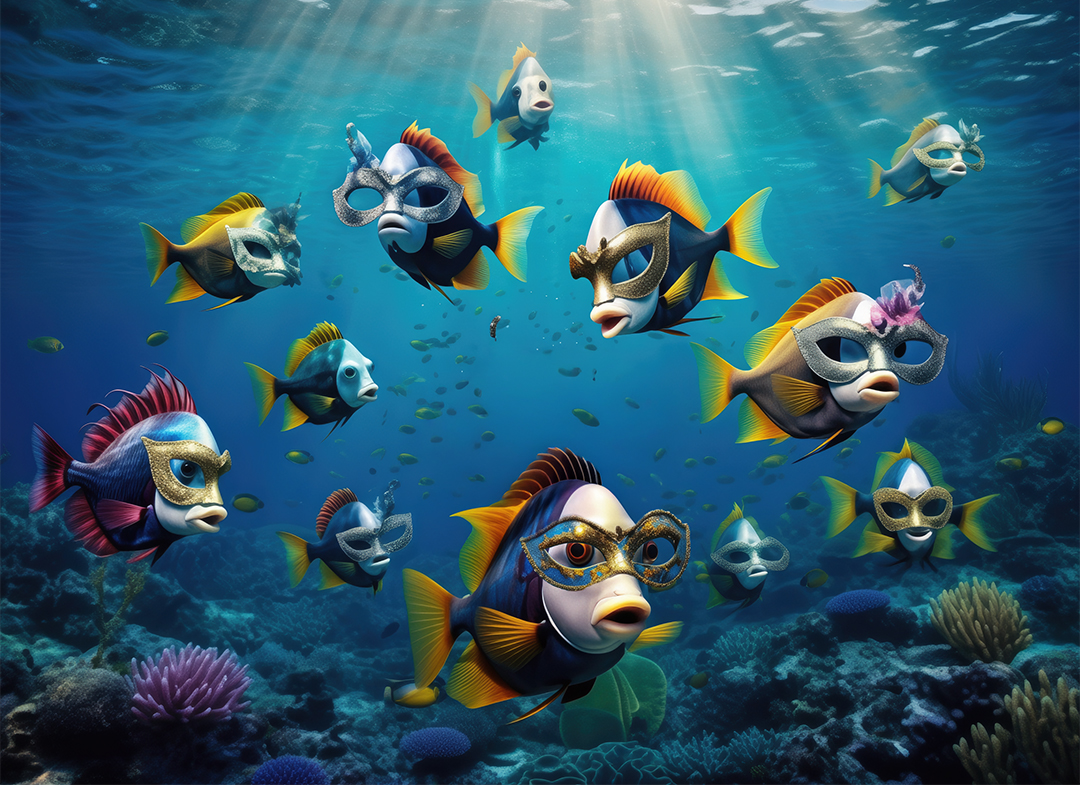
As it happens, there is a metric shit-ton of mislabeled fish being sold in the US, and that skullduggery can occur anywhere throughout the supply chain, not just at restaurants. The seafood industry has been running the longest con this side of a presidential campaign, and that con happens to include over 80% of “white tuna” samples tested turning out to be escolar. In fact, in recent studies, nearly 60% of the 46 fish types tested in US markets and restaurants had been mislabeled, so chances are better than good that when you buy or order seafood, you’re being duped at the expense of both your wallet and (quite possibly) your gut. We are watching the greatest aquatic shell game in the history of American eating, and repeatedly ponying up the cash to bet again and again, deluding ourselves that we know where the real fish is.
Economists have a name for this kind of seafood shell-game: information asymmetry. That’s the polite, academic way of saying one side knows a hell of a lot more than the other and reaps the proceeds deriving from it. In markets where buyers can’t verify quality—think used cars—sellers eventually learn they can swap in cheaper stuff, charge higher prices, and nobody’s the wiser…at least until the bathroom turns into an active crime scene.
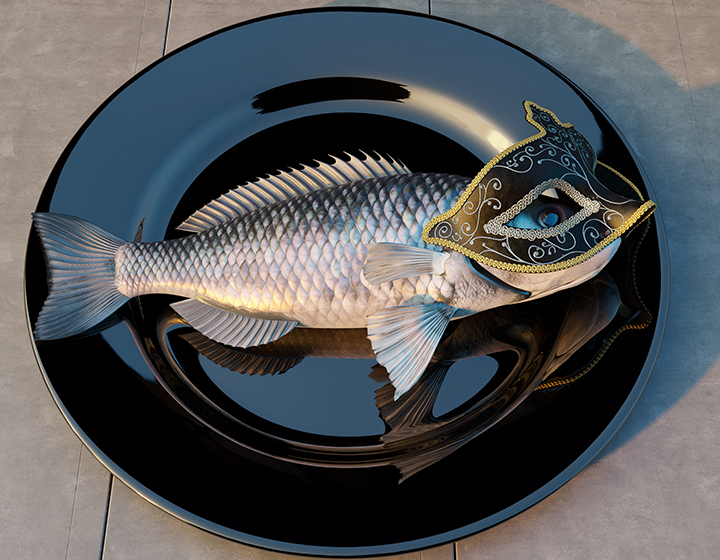
Walk into any restaurant in America—from the greasiest diner in Newark to the most pretentious bistro in Beverly Hills—and order the red snapper. What arrives at your table, nine times out of ten, is tilapia. That “wild Alaskan halibut” you just dropped $40 on? Pangasius from the Mekong Delta, raised in waters so polluted they glow in the dark. Staring into the glassy eyes of what the menu proclaimed to be “Fresh Atlantic Salmon”? It’s likely the hollow gaze of something that never saw the Atlantic, never felt the rush of cold northern waters, and never experienced anything more authentic than the concrete walls of a Vietnamese fish farm and a long, strange trip in the belly of a refrigerated cargo plane.
The beauty of this scam is its elegant simplicity. Once you skin and fillet a fish, remove its head, and freeze it solid, even marine biologists need DNA testing to tell you what species they’re looking at. Low-valued species get substituted for a more expensive one, origin documents are falsified, and sometimes, hygiene standards get ignored. It’s the perfect crime—nobody bothers to verify what they’re eating because nobody expects to get hustled. And why the hustle? Because the real stuff is difficult to source and even harder to keep fresh. We’re talking about fish caught in deep, cold waters, flown in from halfway across the globe. That’s not sustainable. Hell, it’s not even profitable for most places.
And here’s the kicker: when quality can’t be credibly identified, economists warn that markets gradually devolve into dumping grounds for the lowest-quality products. It’s called adverse selection, and it explains perfectly why genuine red snapper is rarer than bipartisan cooperation. Why keep catching expensive fish if everyone else is getting away with selling tilapia in drag? Eventually the good stuff disappears because the market rewards the fake stuff.
The two most mislabeled species are sea bass and snapper, with 7 of 120 red snapper samples (SIX percent!) collected nationwide actually being red snapper. If you’re ordering it, you’re likely get tilapia; if you’re ordering hogfish, you may get grouper; and, if you’re ordering grouper, you may get catfish, sole, or cod. And you won’t even know that what you just ate wasn’t real grouper. You just eat it, because, well, it tastes good enough, doesn’t it? If you take a nebulous filet of white fish and top it with a generous helping of that heavily spiced stuff that the tattooed, Spanglish-speaking saucier concocted, chances are you won’t ever notice the bait and switch—and they’re hedging their bets on that. You’re complicit without even knowing it.
This is systematic, industrial-scale fraud that runs from the docks of Vietnam to the plates of South Beach. When you can buy tilapia for $2 a pound and sell it as red snapper for $18, you’re not running a business—you’re running a money-printing operation that would make the Federal Reserve Viagra-hard. Farm-raised salmon sold as wild Alaskan: 400% markup. Vietnamese swai passed off as sole: 800% markup. A fish by any other name would smell as fresh.
Economists call those margins “rent extraction,” but honestly, let’s just call it robbery with chopsticks. And the incentives are obvious: if I can turn a $2 fish into an $18 entrée with a menu typo, I’d need a moral compass forged of tungsten to resist. Markets don’t magically align with ethics; they align with incentives.
Restaurants will often plead ignorance to the charade, and they’re sometimes in the right. With provenance being harder and harder to prove, overfished and vulnerable species are often substituted with a more sustainable catch (black cod masquerading as Chilean sea bass), and cheaper farmed fish gets sold to restaurants as wild-caught (salmon being the biggest offender). In fact, farmed salmon that was mislabeled as wild made up over 30% of samples taken from sushi restaurants across the US. And don’t forget the tuna because the bigeye you ordered might be yellowfin and that “bluefin” that cost you a month’s rent? It could be anything with fins and a decent publicist. The sushi industry has become a high-stakes game of ichthyological Russian roulette.
And where the hell is the FDA in all this? Off inspecting hand sanitizer factories while the seafood industry runs through our markets and eateries like Vikings pillaging monasteries. Less than 2% of imported seafood gets inspected. The agency inspects more ass implants than it does fish filets.
The USDA won’t touch seafood—that’s the FDA’s turf. The FDA stumbles to enforce seafood labeling—they’re too busy letting slaughterhouses call anything with a pedigree “American Wagyu”. The Commerce Department tracks the economics but not the ethics. It’s a bureaucratic circle jerk of epic proportions and we’re standing in the middle, wondering if anything we put in our mouths is what it claims to be.
And the buzzkill is that regulation can’t magically fix an information problem this deep. Agencies and agents can chase fraud, but they can’t sit at every dock, snoop around restaurants, or oversee each menu rewrite. When the entire incentive structure rewards deception, enforcement just turns into whack-a-mole with a government badge and a clipboard.
This country has been lulled and conditioned to accept mediocrity, so long as it’s dressed up in gold leaf and served with a side of bullshit authenticity. The fraud isn’t just about the fish, it’s about what we’ve come to expect from the industry—from longliner to lineman. The only solution is radical transparency and aggressive skepticism but what the hell are we to do? Demand to see the whole fish? Ask for documentation? Proof of provenance? Because in the end, when the last honest fishmonger has been driven out of business by rancid margins, when every piece of seafood in America is some form of gastronomical theater, we’ll look back on this era as the time when we traded our taste buds for the illusion of abundance. And the seafood Houdinis will be sitting on their trawlers, getting a good chuckle at us while they watch the sunset paint the sky the color of farm-raised salmon.
And that’s the real tragedy: once consumers stop trusting labels, genuine producers lose out. Good fish leaves the market because mediocre fish comes disguised as premium, and eventually everyone gets the same product at a higher price. That’s the textbook definition of market collapse, only with more soy sauce in this case.
{ 0 comments }